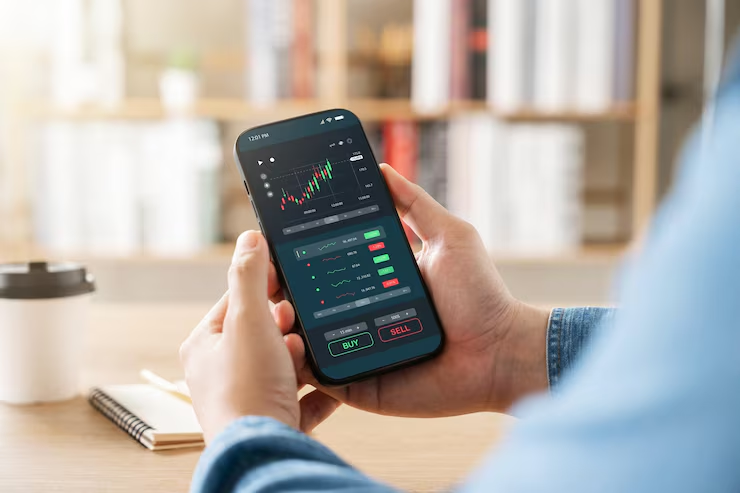
Most first-time buyers underestimate the difference between knowing exchange-traded funds and actually having one. From starting an account to making the first ETF order, the entire process may be finished with a smartphone, takes only one afternoon, and doesn’t require any specialist knowledge. What stops most people is not the complexity. It is the assumption that there must be more steps than there actually are.
What Needs to Be in Place Before the First ETF Purchase
Exchange traded funds trade on stock exchanges exactly the way individual shares do. This means an investor needs a demat account, a linked trading account, and a bank account connected to both. Without these three in place, buying an ETF is not possible regardless of which online trading app the investor is using.
For investors who do not yet have these accounts, modern platforms have reduced the setup process to a single digital flow. PAN verification, Aadhaar-based KYC, and bank account linking complete the entire setup within one session on a phone. Account activation follows within 24 to 48 hours. The investment infrastructure that once required a branch visit and a week of waiting now fits inside a lunch break.
Finding ETFs Inside the Online Trading App
Once accounts are active, the online trading app becomes the investor’s primary interface for everything that follows. Most platforms organise exchange traded funds within a dedicated section alongside equities, allowing investors to browse by index, asset class, sector, or fund house.
An investor looking for a broad market exposure will typically search for Nifty 50 or Nifty Next 50 index ETFs. Someone specifically interested in gold as an asset class will find gold ETFs listed alongside equity products. The search function on a well-designed online trading app surfaces these options within seconds.
Before placing any order, checking the ETF’s expense ratio, the assets under management, and the average daily trading volume is worth spending five minutes on. Expense ratio determines the annual cost of holding the fund. Trading volume determines how easily units can be bought and sold at fair market price without significant spread.
Placing the First Exchange Traded Funds Order
Buying exchange traded funds through a trading app follows the same order process as buying any listed share. The investor searches for the ETF by name or symbol, selects the quantity, chooses between a market order for immediate execution at the current price or a limit order to specify the maximum price they are willing to pay, and confirms the transaction.
The units appear in the demat account within the standard T plus one settlement cycle. From that point, the investment can be tracked within the same platform where it was purchased.
What Comes After the First Purchase
The investors who build the most consistent ETF portfolios are not the ones who check prices daily. They are the ones who set up systematic investments through the online trading app and contribute regularly without reacting to short-term market movements.
Exchange traded funds reward the investor who buys consistently and holds patiently. The trading app makes the first part easy. The second part is entirely the investor’s responsibility.