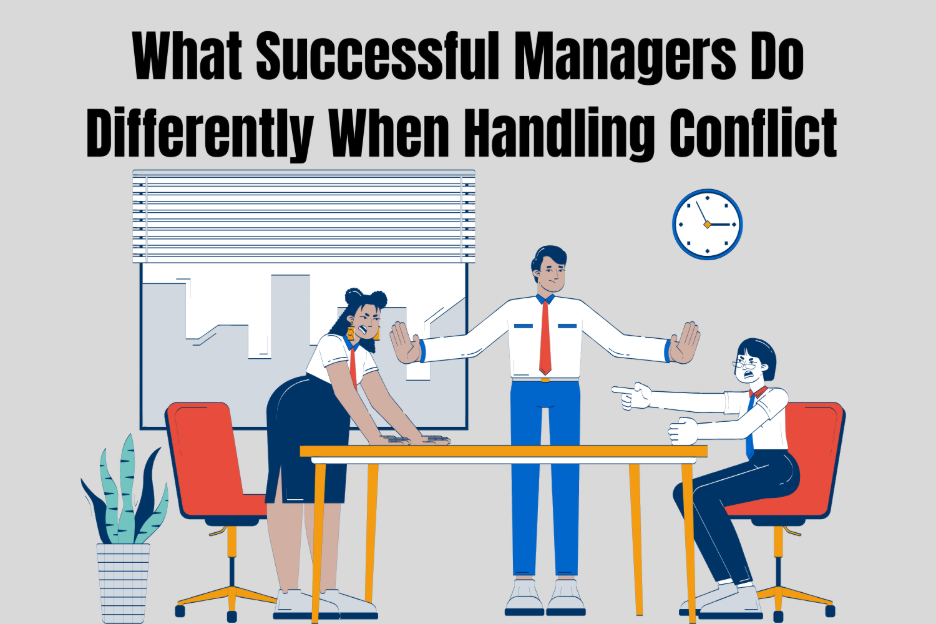
Have you ever noticed how some managers turn workplace disagreements into opportunities for growth while others allow conflicts to damage team performance? Managing people effectively requires more than technical expertise. It demands strong communication and the ability to resolve issues fairly. CIPD Level 7 helps professionals develop advanced leadership and people management capabilities that support successful workplace relationships. Understanding Conflict Management allows managers to identify challenges and maintain a positive working environment.
In this blog, we will explore what successful managers do differently when handling conflict.
What Successful Managers Do to Resolve Workplace Conflict Effectively
Below are the key practices that successful managers use to handle workplace conflict:
Address Issues Early
Successful managers know that they rarely solve unresolved conflicts. Ignoring minor issues can easily lead to more serious issues.
Managers may avoid tension building and foster productive dialogue by addressing issues early on. This proactive strategy promotes successful conflict resolution and preserves a positive company culture.
Listen Before Making Judgements
One of the most significant errors that managers can make is to form opinions on a matter before they have heard all of the perspectives on it. When it comes to a problem, successful managers want to know all of the situations.
When employees actively listen, they may experience feelings of being respected and heard. It helps managers receive accurate information before making judgements, which is a significant benefit.
Remain Neutral and Fair
Employees expect that the manager will resolve disputes fairly. Taking sides too soon can damage team trust and increase conflict.
When acquiring data and assessing the issue, effective managers maintain objectivity. They continue to focus on coming up with ideas that are advantageous to the company.
Identify the Root Cause
Rather than being the root of the problem, many conflicts at work are indicators of more serious problems. Effective managers try to figure out what’s generating the issue by looking past the obvious arguments.
Managers can create solutions to stop similar problems from happening in the future by figuring out the underlying reason. Conflict Management results are strengthened by this strategy.
Promote Collaboration Instead of Competition
When people collaborate to discover solutions, conflict resolution is most successful. Instead of encouraging employees to compete with one another, successful managers promote teamwork.
This strategy creates a sense of shared accountability for solving workplace issues and strengthens relationships.
Adapt Their Management Style
Different situations require different strategies. They are aware that different situations may call for different strategies for conflict resolution.
Effective managers evaluate each person’s demands and change their communication style. Stronger working connections and better results are the result of this flexibility.
Focus on Long Term Relationships
Effective managers consider the future in addition to the immediate problem. They are aware that relationships at work endure long after a dispute has been settled.
Managers contribute to maintaining confidence and fostering continued cooperation by encouraging respect and understanding throughout the settlement process.
Encourage Accountability
Individuals must accept accountability for their acts in order to resolve conflicts successfully. They help team members understand their responsibilities in the workplace.
Accountability improves a culture where employees learn from mistakes instead of repeating them and helps in producing equitable results.
Develop Emotional Intelligence
When it comes to handling conflict at work, emotional intelligence is important. Emotionally intelligent managers are better able to handle challenging interactions.
To better manage people, foster pleasant workplace relationships and establish trust, professionals attaining CIPD Level 7 frequently hone their emotional intelligence skills.
Turn Conflict into Learning Opportunities
Instead of seeing conflict as a problem to be solved, effective managers see it as a chance for personal development. Conflicts at work can highlight problems with teamwork.
Managers can improve team performance and avoid future disagreements by considering these instances and making necessary adjustments.
Conclusion
Any workplace will inevitably have conflict, but how managers handle it can have a big impact on team productivity. Successful managers prioritise building connections and addressing problems early. Workplaces where employees feel valued and inspired to collaborate are facilitated by having strong Conflict Management abilities.
For professionals looking to strengthen their leadership capabilities and people management expertise, Oakwood International provides valuable opportunities to develop skills that support effective conflict resolution through CIPD Level 7.