Why 24-Hour Wear Matters for Health Tracking
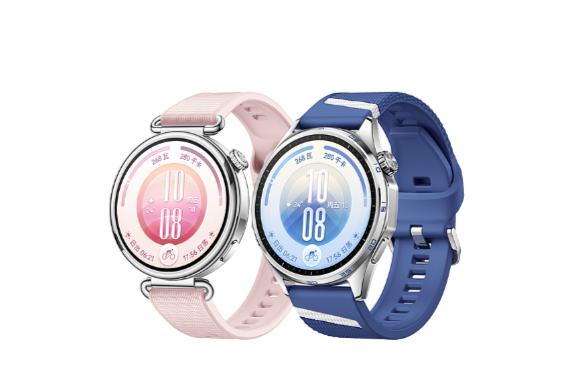
Health data collected only during workouts tells a partial story. The most meaningful insights come from continuous monitoring across all daily activities—sleep, work, exercise, leisure. The HUAWEI GT 7 watch is engineered for exactly this kind of all-day wear, with a design comfortable enough for sleeping in and durable enough for the most active days. When a watch is worn around the clock, it captures the complete picture: how heart rate behaves during a stressful work presentation, how sleep quality differs between weekdays and weekends, how activity levels fluctuate through the month. This uninterrupted data stream is what makes longitudinal health analysis possible, revealing patterns that sporadic tracking would never uncover.
Sleep Tracking That Actually Works
For sleep tracking to be accurate, the watch must be worn while sleeping. This demands exceptional comfort—no heavy case pressing into the wrist, no rough strap causing irritation, no bright display disrupting the sleep environment. The device should automatically recognize when the user falls asleep and wakes up, without requiring manual start. Over time, this continuous sleep data reveals patterns that daytime trackers simply cannot capture: how alcohol affects deep sleep, how exercise timing influences sleep onset, how stress manifests as restless nights. The huawei gt 7 watch is designed with nighttime wear in mind, using lightweight materials and a smooth strap that does not catch on bedding or leave indentations. Automatic sleep detection means users simply put it on and go about their lives; the data collection happens on its own.
From Morning Routine to Evening Wind-Down
A versatile smartwatch transitions through the day’s many phases seamlessly. Morning: wake-up alarm, readiness score, morning exercise tracking. Workday: sedentary reminders, stress monitoring, message notifications. Evening: dinner, relaxation, gentle activity tracking. The huawei gt 7 watch adapts to each phase without requiring user intervention—automatically switching between workout modes, adjusting display brightness, and conserving battery when features are not needed. This contextual awareness means the watch anticipates what the user needs at each moment: a bright display outdoors during a run, a dim screen indoors during a meeting, a silent vibration for an important notification during dinner. The wearable becomes truly invisible in its usefulness—present when needed, unnoticed when not.
Swim Proof and Sweat Proof
All-day wear includes all conditions—rain, sweat, unexpected swims, and daily showers. A water-resistant smartwatch eliminates the need to remove the device before washing hands or jumping into a pool. Swim tracking modes further extend this capability, recording laps, distance, and stroke type during pool sessions. This water resistance is not just a spec—it means fewer moments when the watch has to come off, keeping health data continuous. No need to take it off before washing dishes, no concern when caught in a rainstorm, no hesitation before jumping into a pool on a summer day. The watch simply stays on, recording data through every activity and every weather condition.
Conclusion: The Watch That Never Stops
The ultimate test of a wearable is whether users forget it is there. When a watch is light enough to sleep in, tough enough for any activity, and smart enough to anticipate needs, it becomes a constant companion rather than an accessory to remember. All-day wear is the condition that makes comprehensive health monitoring possible—sleep data, daytime activity, stress patterns, and workout performance all captured together in one unbroken stream. For anyone seeking a truly all-day health wearable, exploring the official product page reveals a device designed for continuous, unobtrusive health monitoring.
The Comfort Factor: Why Sleep Tracking Requires Special Design
Sleep tracking places unique demands on a wearable. The device must be light enough not to disturb sleep, the strap must be soft enough not to irritate skin through the night, and the display must not emit disruptive light during sleep hours. Watches designed for all-day wear often overlook these nighttime requirements. A well-designed wearable recognizes that sleep tracking is as important as workout tracking, and it engineers the device accordingly: lightweight construction, hypoallergenic strap materials, and automatic display dimming during sleep hours. When a watch is comfortable enough to forget about at night, it captures the sleep data that users actually need. This attention to nighttime comfort separates wearables that truly track health around the clock from those that stop working when the user falls asleep.
The most impressive thing about an all-day wearable is how little it needs to be thought about. It sits on the wrist, it tracks data, it provides insights, and it charges conveniently overnight. It does not demand attention, it does not interrupt the day, and it does not require special handling. This level of seamless integration is the ultimate goal of wearable design. When the user simply puts it on in the morning and forgets about it—until a health alert, a workout summary, or a readiness score prompts a moment of awareness—the device is doing its job perfectly.