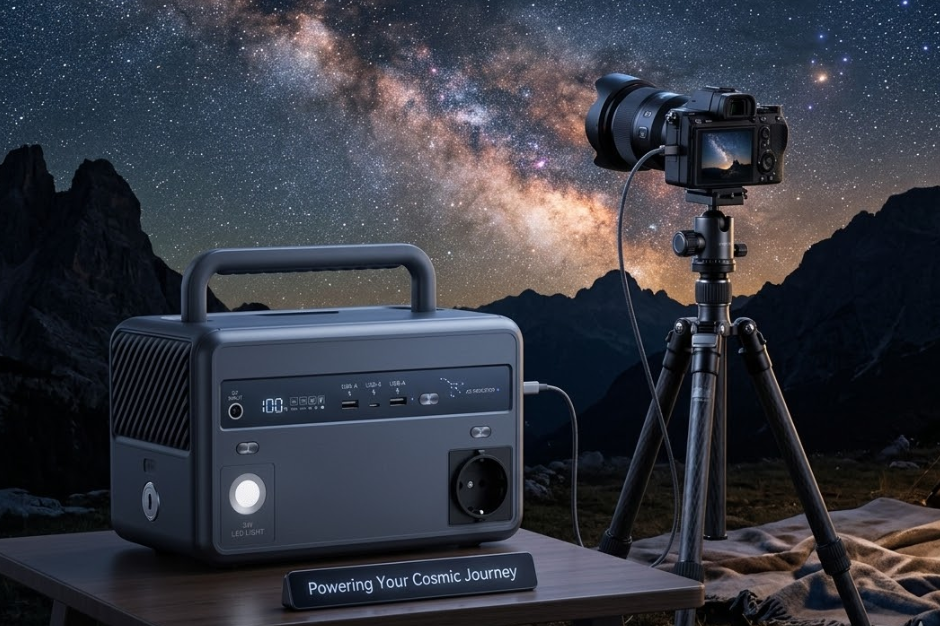
Shooting the night sky is an exciting experience. From the Milky Way to shooting stars, every press of the shutter feels like capturing a secret of the universe. However, many photographers have faced the frustration of running out of camera power in the middle of the night, interrupting time-lapses or long-exposure shots. Long exposures, star trails, trackers, and moisture-heating strips—all these devices consume significant power in cold conditions. Without proper preparation, even the most stunning night sky can leave you with regrets.
This article will introduce several solutions to help you avoid these predicaments and explain why a portable power station is a smart choice.
1. Understand What Actually Drains Your Camera Overnight
Night photography is very different from daytime shooting. Cameras require long exposures, LCD screens remain on for extended periods, time-lapse and star-tracking require continuous shutter and tracker operation, and moisture-heating strips keep lenses dry. Add low nighttime temperatures, which significantly reduce battery performance, and even with spare batteries, many photographers may find their power running low before dawn.
So, if you want to shoot all night with peace of mind, understanding your equipment’s power consumption is the first step.
2. Power Gear You Need for an All-Night Shoot
2.1 Spare Batteries
Whether you use a DSLR or mirrorless camera, spare batteries are essential. However, in cold conditions, batteries drain faster than usual. Therefore, relying solely on spare batteries is not enough to guarantee power throughout the night.
2.2 External Power or Dummy Batteries
Using an external power source (dummy battery) allows the camera to draw power directly from a portable power station. This is a common approach in night photography. With this setup, long exposures won’t interrupt your shooting, making it ideal for time-lapse and star trail photography.
2.3 Portable Power Stations
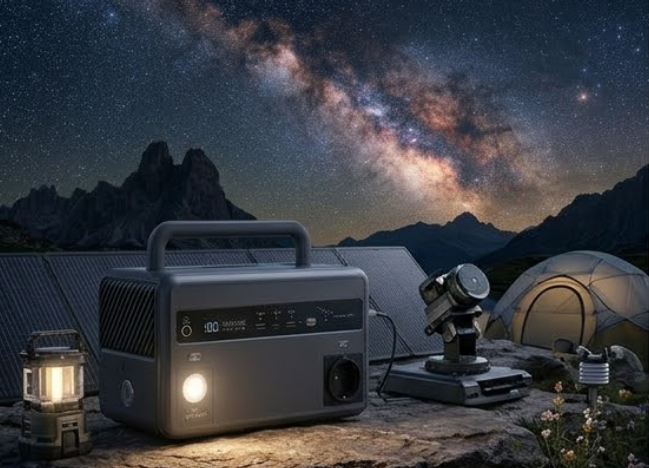
A reliable portable power station is the core of night photography. Compared to traditional fuel generators, it is quiet, emission-free, safe to use inside a tent or vehicle, and can power cameras, phones, trackers, lights, and other devices simultaneously. Brands like Piforz provide outdoor power stations that deliver stable USB-C or DC power for extended periods, making them perfect for night shooting environments.
2.4 Small Lighting and Auxiliary Devices
Headlamps, red lights, and moisture-heating strips all require power. Without a portable power station, your night shoot could be interrupted by dead auxiliary devices.
3. The Ideal Power Setup for Shooting Through the Night
3.1 How Much Power Do You Actually Need?
Let’s tally the typical power consumption for night sky photography:
- Camera external power: 5–10W. This is essential for running the camera all night, especially for long time-lapses or interval shooting.
- Star tracker: 3–8W. Whether an equatorial mount or star tracker, this is needed to capture streak-free Milky Way and deep-sky images.
- Moisture-heating strip: 5–15W. Often overlooked, but in humid nights, foggy lenses can ruin a night’s wait. The colder it is, the more power the strip consumes.
- Phone or tablet: For navigation, star charts, or planning shots. These screens also consume power, but can be considered basic needs.
Estimating for an 8-hour shoot:
- Camera power (8W × 8h) = 64Wh
- Tracker (5W × 8h) = 40Wh
- Heating strip (10W × 8h) = 80Wh
- Phone charging (5W × 4h, intermittent) = 20Wh
Total: ~200–250Wh.
This is the theoretical ideal; in reality, you also need to account for device surge power, line loss, and battery efficiency drops in cold weather. A safe margin of 30–50% suggests a 300–400Wh portable power station is a practical choice.
3.2 Why Not Use a Regular Power Bank?
Regular power banks can charge phones but cannot output 220V AC or continuously power cameras and trackers. The advantage of a portable power station is that it can charge phones via USB and provide stable AC power for cameras, trackers, and heating strips.
High-quality units, like Piforz, include built-in BMS (Battery Management System) to adjust charge/discharge strategies in cold temperatures, protecting batteries from freezing—a vital feature for overnight shooting at mountaintops, plateaus, or deserts.
3.3 Example Setup

After calculating power needs, here’s a setup that covers most night sky photography:
- Portable power station ≥300Wh: Core of the system. Powers trackers, heating strips, and provides stable AC power to the camera, freeing it from internal battery limits. 300Wh can support an entire night of shooting with some margin.
- Two spare camera batteries: Even with external power, spares are essential—for switching angles, temporarily moving away from the power station, or in extreme cold where cables may stiffen.
- Headlamp spare batteries: Often overlooked but crucial for safety in dark mountains. Extra batteries ensure you can pack gear without worrying about running out of light.
- Two USB-C or DC extension cables: Extend device placement flexibility. Place the power station in a tent or backpack while the camera/tracker sits optimal distance away. A second cable acts as backup or powers additional devices simultaneously.
This setup’s biggest advantage: no complicated wiring, no generator noise—quiet, stable, and reliable for shooting. When the Milky Way rises over the horizon, you won’t worry about battery levels—just press the shutter and enjoy the view.
4. Tips for Field Use
- Place the power station under a tripod or in a bag to protect from wind, being stepped on, or tipping over.
- In cold weather, wrap the power station and cables with a towel or windproof cloth to slow battery decay.
- Maintain stable output; avoid frequent plug/unplug to ensure cameras and auxiliary devices stay powered all night.
- Test the system for 1 hour before shooting to avoid unexpected power loss.
- Minimize camera LCD use; turn off Wi-Fi, Bluetooth, and auto-preview; use red light for illumination; keep devices dry and warm. These small tips help extend battery life.
5. conclusion
The charm of night photography is watching from sunset to sunrise—but only if your gear stays powered. With a portable power station, spare batteries, and essential auxiliary devices, you can focus entirely on the stars without worrying about running out of power. Bringing a portable power station makes the entire process smooth and reliable: from dusk till dawn, your camera keeps running, and the beauty of the night sky will never be missed.