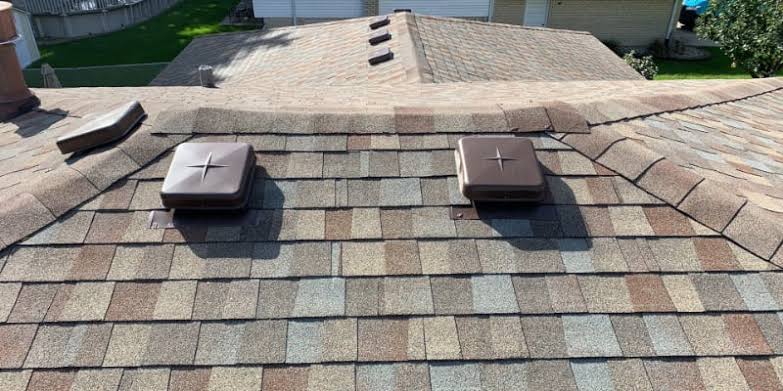
A young couple closed on a 1990s starter home just outside Fredericksburg last spring, low-$300s, and one line in the inspection report about a twenty-year-old asphalt roof nearly derailed the whole celebration. Before calling a single roofer, the wife assumed the entire roof needed tearing off, then learned that the free roof estimates fredericksburg va contractors hand out often point toward a repair instead of a replacement. Here is the myth worth killing on day one. An old roof and a dead roof are not the same thing. Age is a number on a disclosure form. Condition is what actually leaks, and only one of those two shows up in a way a nervous buyer can really act on. A first-time owner who confuses age with condition can hand a contractor five figures for work a few hundred dollars would have solved.
An Old Roof Does Not Always Mean Replacement
Start with the myth, because it is the one that costs people the most money. A buyer hears twenty years and pictures a full tear-off with a five-figure invoice attached. The reality is duller and a lot cheaper. Asphalt shingles are commonly rated for 20 to 30 years, and plenty of them last well past the label when the attic breathes and the flashing stays sound. The case we see most often is a roof that looks tired from the driveway yet only needs one slope or a few details reworked. Tired is not dead. A roof earns a replacement by failing, not by hitting a birthday on a form.
Age Matters Less Than Underlayment Condition
The date on the seller’s disclosure tells you when the shingles went up. It says almost nothing about the felt or synthetic underlayment beneath them, and that hidden layer is the part actually keeping water off the wood deck below. Punch the shingle brand into GAF’s free shingle selector and you can usually date the product line within a few years, which is a satisfying trick but not a verdict. What truly decides repair versus replacement is whether the underlayment and decking are dry, sound, and free of rot. The better roof estimates fredericksburg va homeowners collect break the underlayment condition down line by line, instead of leading with a single scary number. A good inspector pulls a few shingles and actually looks underneath before quoting a thing.
Not Every Leak Signals Total Failure
A brown stain on the bedroom ceiling feels like a death sentence to a brand-new owner. Usually it is a small problem hiding behind a scary ring. Most leaks trace back to flashing, the rubber boots around vent pipes, or a handful of wind-lifted shingles, not to systemic rot spread across the whole roof. Budget a couple hundred dollars for that kind of fix. Honestly, closer to $500 once a pro adds fresh flashing and a bundle of color-matched shingles. This gap between panic and reality matters more now than it did a few years ago. In November 2025, the National Association of Realtors reported that the share of first-time buyers in the market had contracted by 50% since 2007, while the typical repeat buyer is now 62 years old. Those older repeat buyers know exactly how to scrutinize a roof, so a nervous newcomer who over-reacts to one ceiling stain is negotiating against seasoned owners who will not.
Questions New Owners Should Ask First
Skepticism is a first-time buyer’s sharpest tool, so aim it at the roof and at whoever is quoting the roof. Set money aside before you even sign at closing. Cornell University’s home maintenance research suggests reserving between 1 percent and 4 percent of a home’s value each year for upkeep, which on a low-$300s house works out to roughly $3,000 to $12,000 spread across the entire property, not the roof by itself. Knowing that range keeps one roof quote in proportion. Then start asking the uncomfortable questions.
Is a 20-Year-Old Roof Automatically at the End of Its Life?
No, and treating age as destiny is exactly how people overspend. A 20-year-old asphalt roof that was installed correctly and ventilated well can still have real service life in it. What matters is the inspection finding, not the birthday printed on the disclosure. Ask for photos of the decking and underlayment before you accept any replacement pitch.
Can I Trust a Free Estimate, or Is It Just a Sales Pitch?
A free estimate is only as honest as the contractor writing it, so read it like a skeptic. The tell is specificity. A trustworthy estimate names what is wrong, names where it is, and prices the repair, rather than jumping straight to a full replacement. If two estimates disagree by a wide margin, get a third and make each one walk you to the actual problem area.
Should I Replace the Whole Roof Before I Move In?
Rarely, unless the inspection shows active and widespread failure. Move-in stress pushes people toward big preemptive projects they do not need yet. In practice this usually means a targeted repair now buys several years to plan and save for a full replacement later. Spend the reserve on what is genuinely broken, and leave the rest for the roof that earns it.
A Real Estimate Settles the Repair Debate
Here is the reality the myth keeps hiding from anxious new owners. A tired roof is not the same as a roof with one foot in the grave, and the only honest way to tell them apart is a real inspection with numbers attached to it. A written estimate turns a vague fear into a scoped decision, repair this, monitor that, replace later. For a first-time owner staring up at a two-decade-old roof, that single piece of paper is worth far more than any online age calculator. Get the inspection, read the estimate closely, and let the roof’s real condition, rather than its age, decide what you spend.