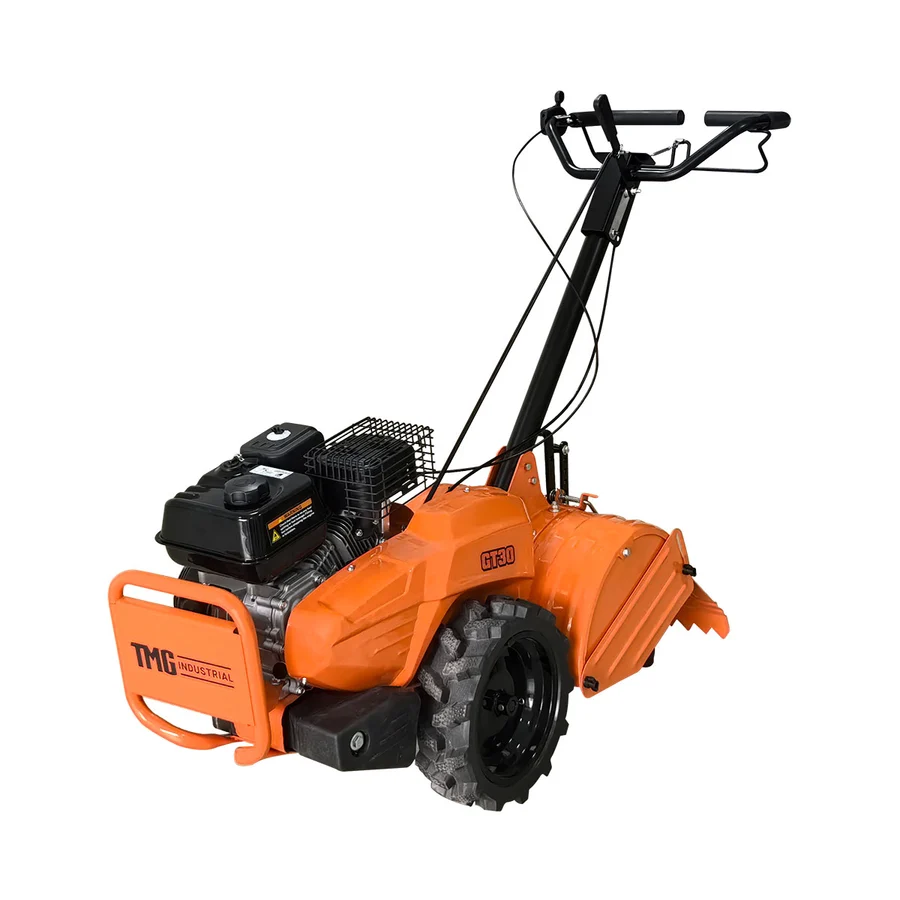
The working life of a garden machine is measured in days, not seasons
Count the days a home vegetable plot needs breaking up and the number is small, perhaps three or four across a Canadian year. A garden tiller does that work and then sits in a shed until the following spring, which means idleness rather than use is its normal condition.
That changes what a garden tiller owner should worry about. A machine running hard every day wears its moving parts, while one standing still for ten months is attacked by something else entirely, and the damage happens quietly with nobody watching.
The fuel left in the tank is what kills small engines
Gasoline does not keep. Within months it oxidizes and forms gums and varnishes, and the ethanol blended into most pump fuel draws moisture out of the air and holds it in the tank.
Those deposits end up in the carburetor of a garden tiller, where the passages are narrow enough to be blocked by residue that looks like nothing at all. Most small engines that refuse to start in spring are not broken, merely gummed up from the fuel left in them.
Two ways to put a machine away, and both work
The first is to run a garden tiller dry, letting the engine stop on its own, which leaves nothing behind to degrade over winter. The second is to fill the tank and add a fuel stabilizer, then run the engine a few minutes so treated fuel reaches the carburetor. A full, treated tank also leaves no air space for condensation, which is what rusts a tank from the inside.
Old oil is acidic, and it sits there all winter
Used engine oil carries combustion by-products that turn mildly acidic, and leaving that in the crankcase through a cold winter gives it months to work on bearing surfaces. Changing the oil at the end of the season rather than the beginning costs the same money and leaves clean oil against those surfaces.
Clean the tines before the soil sets like concrete
Damp soil packed around the tines of a garden tiller dries hard over winter, and root fibers wrapped around the shaft can work their way into the seals at either end. Clearing that before storage takes a few minutes and prevents a job that takes an hour later. A gardener near Chilliwack cleans and oils the tines each autumn and has never opened a seized gearbox.
Small engines divide by how they are put away
- Run dry: nothing left in the tank to degrade
- Full and treated: stabilizer plus no air space
- Left as is: the reason spring starts fail
Where a season-end routine pays and where it does not
- Strength: starts first pull the following spring
- Strength: an hour of work saves a service bill
- Limit: none of it helps a machine already gummed
- Limit: stabilizer has its own shelf life
Weighed against doing nothing, an afternoon at the end of the season costs little and returns a machine that works when the ground is finally ready, which in a short Canadian spring is worth more than the hour it took.
Seasonal equipment is increasingly judged on how it restarts
As more households own machines used a handful of days a year, buyers weigh how easily equipment wakes up after a long winter rather than only what it does while running.
That change in what owners value is why the garden equipment that TMG Industrial supplies is built around simple engines an owner can put away and bring back without a workshop.