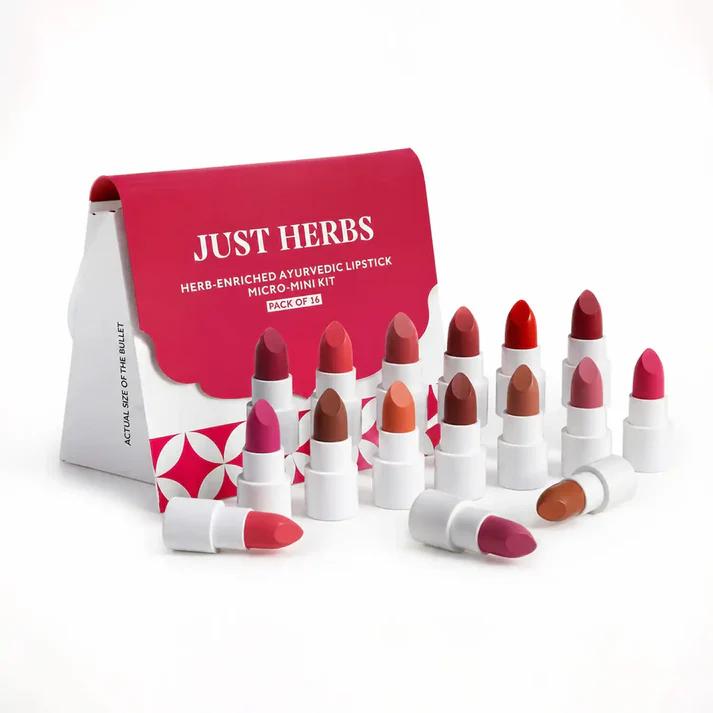
Lip pigmentation is one of those things nobody talks about until they’re standing at a mirror wondering why their brand-new lipstick looks nothing like it did on the model. It’s not the lipstick’s fault, and it’s definitely not your fault either. The right ayurvedic lipstick can actually work in your favour here, since botanical formulas tend to be richer in pigment and kinder to natural lip tone at the same time. Pigmented lips, meaning lips with a naturally darker or uneven base tone, change how any colour sits on top. Once you understand that, shade shopping actually gets a lot easier.
Why Lipstick Looks Different on Pigmented Lips
Here’s the basic idea. Lipstick colour is essentially a layer of pigment sitting on top of your natural lip colour. If your lips are light pink to begin with, a sheer red will look like a soft rosy red. If your natural lip tone leans deeper, brownish, or has patches of darker pigmentation, that same sheer red might barely register, or it could shift and look more muted, more brown-toned, than it did in the packaging. This is exactly where a well-formulated ayurvedic lipstick earns its reputation, since the concentrated botanical pigments are built to hold their true colour even on deeper, more pigmented lips.
It’s the same reason foundation shades look different on different skin tones, or why a sheer blush behaves differently depending on what’s underneath it. The base always talks back to the colour you put over it.
So when someone with pigmented lips says a lipstick “didn’t show up,” they’re usually right. It genuinely didn’t, at least not the way it would on a lighter lip base. It’s just how pigment layering works, and it means pigmented lips generally need a bit more product depth or a different formula altogether to get a true colour result.
Sheer, Medium and Full Colour Payoff
Lipsticks generally fall into three payoff categories, and knowing which one you’re picking matters more than the shade name on the bullet.
- Sheer formulas let a lot of your natural lip tone come through. Think tinted balms or glossy finishes. These are lovely for an everyday, barely-there look, but on pigmented lips they’ll mostly just add a wash of colour and a bit of shine rather than a true, opaque shade.
- Medium coverage sits in between. You’ll usually get a recognisable colour, though it may still pick up a slightly different undertone from your natural lip base underneath it.
- Full coverage formulas are built to lay down enough pigment that your natural lip tone gets properly covered, and the shade reads true to the bullet. Matte liquid lipsticks and densely pigmented bullet lipsticks generally fall in this category, since the higher pigment concentration is what gives them that opaque, one-swipe finish. Just Herbs’ Long Stay Ultra Matte Ayurvedic Lipstick, for instance, is formulated to be densely pigmented for this exact reason, and their matte liquid lipstick range works on a similar principle with a CICA and liquorice-based formula that’s built for a properly opaque, long-wearing finish rather than a sheer wash of tint.
Using Lip Liner or a Thin Base
A lip liner does more than just stop your lipstick from feathering. On pigmented lips, it can genuinely change how the final colour reads.
Lining your lips first, in a shade close to the lipstick you’re about to apply, gives that outer edge a boost of pigment before the lipstick even goes on. Filling in the whole lip with liner, not just the edges, before applying lipstick on top is an old makeup-artist trick, and it works particularly well here because it adds an extra layer of true colour underneath your final product.
A thin, nude-toned base coat can help too. Some people use a light concealer or a nude lip product as a base layer under bolder shades, essentially neutralising some of the natural pigmentation before the actual colour goes on. It’s an extra step, sure, but if you’ve ever felt like your lipstick “just doesn’t look the same” as it does on someone else, this is often the missing piece.
Choosing Reds, Berries and Deeper Browns
These three families deserve a closer look since they tend to be the most reliable performers on pigmented lips.
Reds work best when they lean blue-based rather than orange-based, since the coolness in a blue-red tends to read clearly regardless of what’s underneath. A brick or rust-leaning red, which shows up in ranges like Just Herbs‘ herb-enriched lipstick shades, can also work beautifully, especially for those who want warmth rather than a classic cool red.
Berries and wines are forgiving because their depth of colour naturally matches, rather than clashes with, deeper pigmentation. A deep plum or a wine shade tends to look rich rather than patchy.
Browns are probably the easiest entry point if you’re new to full-coverage shades. A warm, toffee, or espresso-leaning brown generally blends with natural lip undertones instead of sitting starkly on top, which is part of why brown shades have stayed a reliable pick across so many lipstick ranges over the years, including deeper, densely pigmented options built specifically for opaque coverage.
Final Thoughts
Choosing lipstick for pigmented lips becomes much easier once you stop relying only on the colour shown in the tube.
Start with coverage. A sheer formula will blend with your natural lip tone, while a full-coverage lipstick will create a more opaque finish. Then consider depth and undertone. Reds, berries, plums and deeper browns tend to show clearly, while pale beige and pastel pink shades may need liner or a neutralising base. An Ayurvedic formula can bring together botanical ingredients and modern colour performance, but the full product still needs to suit your lips. Do your research properly.